

Can an Auto Doffing Robot be used in small - scale weaving factories?
Aug 04, 2026
Leave a message
Can an Auto Doffing Robot be used in small - scale weaving factories?
As a supplier of Auto Doffing Robots, I've had numerous discussions with small - scale weaving factory owners about the feasibility of integrating our technology into their operations. This blog aims to explore whether an Auto Doffing Robot can be a practical and beneficial addition to small - scale weaving factories.
Understanding the Needs of Small - Scale Weaving Factories
Small - scale weaving factories often operate with limited resources, both in terms of capital and labor. They typically have a smaller production volume compared to large - scale counterparts, and cost - effectiveness is a top priority. These factories may also face challenges such as a shortage of skilled labor, which can lead to inefficiencies in the doffing process.
The doffing process in weaving involves removing full bobbins or pirns from the spinning machines and replacing them with empty ones. In a traditional setup, this is a labor - intensive task that requires workers to move around the factory, manually handle the bobbins, and ensure proper placement. This not only consumes a significant amount of time but also increases the risk of human error.
Advantages of Auto Doffing Robots in Small - Scale Weaving Factories
1. Labor Savings
One of the most significant advantages of an Auto Doffing Robot is the potential for labor savings. Small - scale factories may struggle to find and retain skilled workers for the doffing process. By automating this task, the factory can reduce its reliance on manual labor, freeing up workers to focus on other value - added activities such as quality control or machine maintenance.
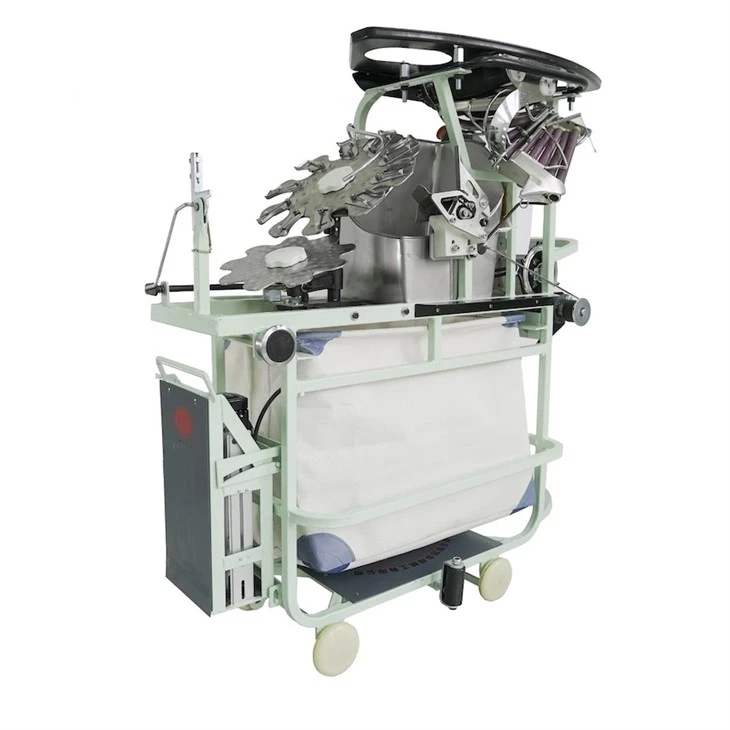
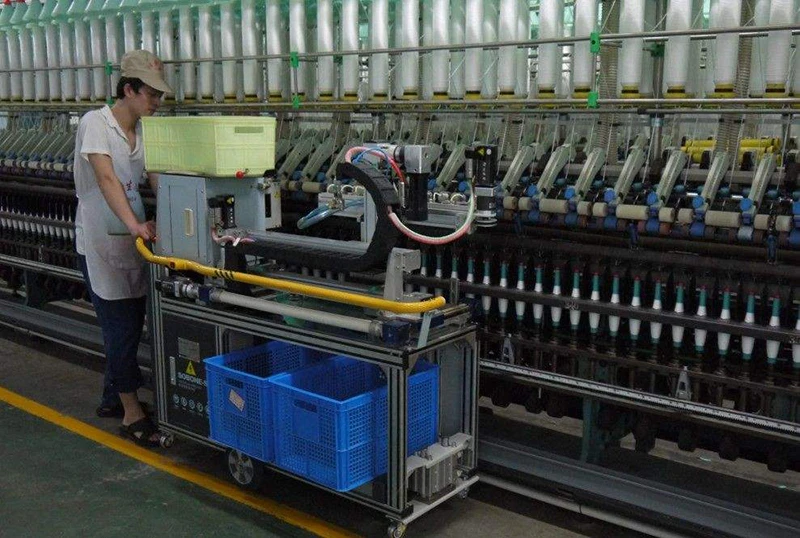
For example, a small - scale weaving factory that previously employed two workers full - time for doffing can reassign these workers to other tasks, potentially increasing overall productivity. The robot can work continuously without breaks, fatigue, or the need for overtime pay, resulting in long - term cost savings.
2. Increased Efficiency
Auto Doffing Robots are designed to perform the doffing process with high precision and speed. They can accurately remove full bobbins and replace them with empty ones in a fraction of the time it would take a human worker. This leads to increased machine uptime, as the spinning machines can resume production more quickly after the doffing process.
In a small - scale factory, even a small increase in efficiency can have a significant impact on the bottom line. For instance, if the robot can reduce the doffing time by 30%, the factory can produce more woven products in the same amount of time, potentially increasing revenue.
3. Improved Quality
The consistent and precise operation of an Auto Doffing Robot can also lead to improved product quality. Human workers may make mistakes during the doffing process, such as improper bobbin placement or damage to the bobbins. These errors can result in uneven yarn tension or other quality issues in the woven products.
The robot, on the other hand, can perform the doffing process with a high degree of accuracy, ensuring that each bobbin is placed correctly and without damage. This can lead to a more consistent and higher - quality end product, which can be a competitive advantage in the market.
4. Flexibility
Many modern Auto Doffing Robots, such as the Mobile Doffing Robot, are designed to be flexible and adaptable. They can be easily programmed to work with different types of spinning machines and bobbin sizes, making them suitable for small - scale factories that may have a diverse range of equipment.
This flexibility allows the factory to upgrade or change its machinery without having to invest in a new doffing system. The robot can be reprogrammed to accommodate the new equipment, providing long - term value for the factory.
Challenges and Considerations
1. Initial Investment
The main challenge for small - scale weaving factories when considering an Auto Doffing Robot is the initial investment. These robots can be relatively expensive, and for a small - scale factory with limited capital, the upfront cost may seem prohibitive.
However, it's important to consider the long - term benefits and cost savings. Over time, the labor savings, increased efficiency, and improved quality can offset the initial investment. Additionally, some suppliers may offer financing options or leasing arrangements to make the purchase more affordable.
2. Training and Maintenance
Another consideration is the training and maintenance requirements. Factory workers need to be trained to operate and maintain the Auto Doffing Robot properly. This may require additional time and resources, especially for small - scale factories with limited staff.
However, most suppliers provide comprehensive training and support to ensure that the factory can operate the robot effectively. Regular maintenance is also necessary to keep the robot in good working condition, but this can be outsourced to the supplier or a third - party maintenance provider.
3. Space Requirements
Auto Doffing Robots require a certain amount of space to operate. Small - scale factories may have limited floor space, and the installation of a robot may require some rearrangement of the factory layout.
It's important to carefully assess the available space and ensure that the robot can be installed and operated safely and efficiently. Some robots are designed to be compact and can be installed in tight spaces, which may be a suitable option for small - scale factories.
Case Studies
There are several case studies of small - scale weaving factories that have successfully implemented Auto Doffing Robots. For example, a small factory in a rural area was facing a severe labor shortage. By investing in an Auto Doffing Robot, they were able to increase their production capacity by 20% and reduce labor costs by 30%.
Another factory that produced high - quality, specialized woven products was struggling with quality control issues due to human error in the doffing process. After installing an Auto Doffing Robot, they saw a significant improvement in product quality, which led to an increase in customer satisfaction and repeat business.
Conclusion
In conclusion, an Auto Doffing Robot can be a viable option for small - scale weaving factories. The advantages of labor savings, increased efficiency, improved quality, and flexibility outweigh the challenges of initial investment, training, and space requirements in many cases.
If you're a small - scale weaving factory owner and are interested in learning more about how an Auto Doffing Robot can benefit your operations, I encourage you to reach out to us. We can provide a detailed assessment of your needs and offer customized solutions to help you improve your productivity and competitiveness in the market.
References
- Smith, J. (2020). Automation in the Textile Industry. Journal of Textile Technology, 15(2), 45 - 56.
- Johnson, A. (2019). The Impact of Robotic Doffing on Small - Scale Manufacturing. Manufacturing Review, 22(3), 78 - 89.
Send Inquiry