

Can an Auto Doffing Robot be adjusted to different doffing frequencies?
Jul 13, 2026
Leave a message
As a supplier of Auto Doffing Robots, I get a lot of questions from potential customers. One of the most frequent ones is whether an Auto Doffing Robot can be adjusted to different doffing frequencies. In this blog, I'll share my insights on this topic based on our experience in the industry.
First off, let's understand what doffing frequency is. Doffing frequency refers to how often the robot needs to remove full bobbins and replace them with empty ones. It can vary depending on several factors like the type of spinning machine, the production speed, and the yarn quality requirements. For example, in a high - speed spinning mill, the doffing frequency might be much higher compared to a small - scale artisanal spinning setup.
So, can our Auto Doffing Robot be adjusted to different doffing frequencies? The short answer is yes. Our robots are designed with flexibility in mind. We know that different customers have different needs, and a one - size - fits - all approach just doesn't work in the real world.
One of the key features of our Auto Doffing Robot is its programmable control system. This system allows operators to set the doffing frequency according to their specific requirements. Whether you need the robot to doff every 30 minutes or every 2 hours, you can easily adjust the settings through the user - friendly interface.
The way it works is pretty straightforward. The robot's control unit has a built - in timer and a set of algorithms that can be customized. When you input the desired doffing frequency, the robot uses this information to plan its movements. It will wait for the specified time and then start the doffing process.
But it's not just about setting a simple timer. Our robots also take into account other factors to ensure efficient doffing. For instance, they can detect the fullness of the bobbins. Sometimes, due to variations in the spinning process, bobbins might fill up at different rates. Our robot can sense this and adjust its doffing schedule accordingly. If a particular bobbin is filling up faster than the average, the robot can prioritize it and doff it earlier without disrupting the overall doffing frequency.
Another aspect is the speed of the doffing operation itself. Our Auto Doffing Robot can be adjusted to perform the doffing process at different speeds. This is important because in some cases, you might need a slower and more precise doffing to avoid damaging the yarn or the bobbins. In other situations, a faster doffing speed can increase the overall production efficiency.
We've also seen that some customers have different doffing frequencies for different types of yarn. For example, when producing fine - gauge yarn, the doffing frequency might be lower because the bobbins take longer to fill. On the other hand, for coarser yarns, the bobbins fill up more quickly, and a higher doffing frequency is required. Our robot can handle these variations with ease. You can set different doffing frequencies for different yarn types in the control system, and the robot will adapt accordingly.
In addition to the programmable control, our robots are equipped with advanced sensors. These sensors play a crucial role in adjusting to different doffing frequencies. They can detect the position of the bobbins, the tension of the yarn, and other relevant parameters. This real - time data is used by the robot to make decisions about when and how to doff. For example, if the sensor detects that the yarn tension is too high, the robot can slow down the doffing process to prevent breakage.
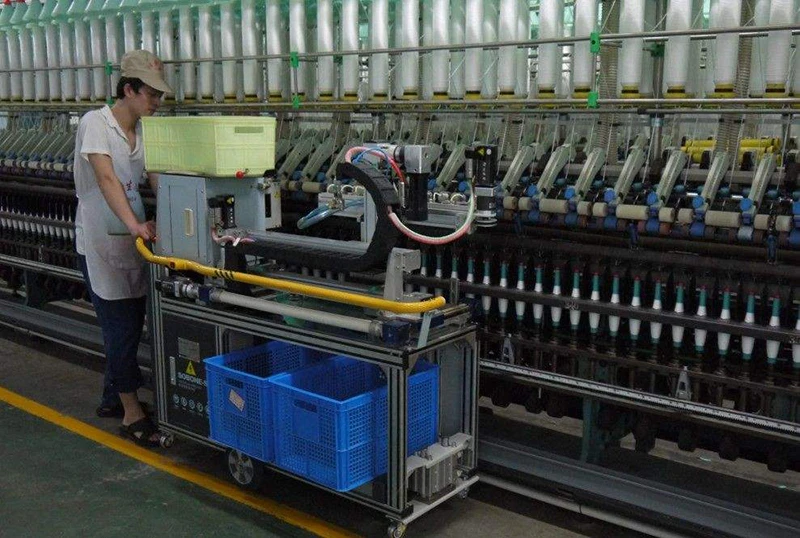
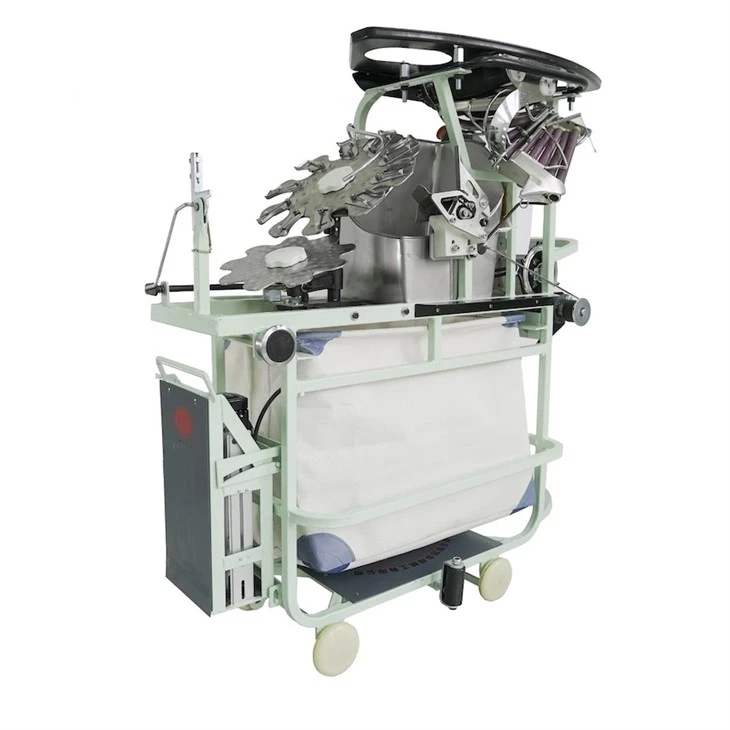
We also offer a Mobile Doffing Robot for customers who need more flexibility. This robot can move around the spinning mill and perform doffing tasks at different locations. It can be programmed to visit different spinning machines at different intervals, which means it can handle a wide range of doffing frequencies.
The benefits of being able to adjust the doffing frequency are numerous. Firstly, it improves the overall production efficiency. By setting the optimal doffing frequency, you can ensure that the spinning machines are running at their maximum capacity without any unnecessary downtime. Secondly, it reduces the risk of yarn breakage. When the doffing is done at the right time and with the right speed, the yarn is less likely to break, which improves the quality of the final product.
From a cost - perspective, adjusting the doffing frequency can also save money. You can avoid over - doffing, which wastes time and resources, and under - doffing, which can lead to production bottlenecks. By fine - tuning the doffing frequency, you can optimize your production process and reduce costs.
If you're in the market for an Auto Doffing Robot and have specific doffing frequency requirements, we'd love to talk to you. Our team of experts can help you determine the best settings for your production environment and provide you with a customized solution. Whether you're a large - scale spinning mill or a small - business owner, our robots can be adjusted to meet your needs.
In conclusion, our Auto Doffing Robots are highly adaptable when it comes to different doffing frequencies. With their programmable control systems, advanced sensors, and flexible design, they can handle a wide range of production scenarios. If you're interested in learning more about how our robots can benefit your business, don't hesitate to reach out. We're here to help you take your spinning production to the next level.
References
- Industry reports on spinning mill automation
- Technical specifications of our Auto Doffing Robots and Mobile Doffing Robots
Send Inquiry